Understanding Posture and Body Mechanics for Everyday Life
Exploring the fundamental principles of efficient movement and positioning for daily comfort and physical function.
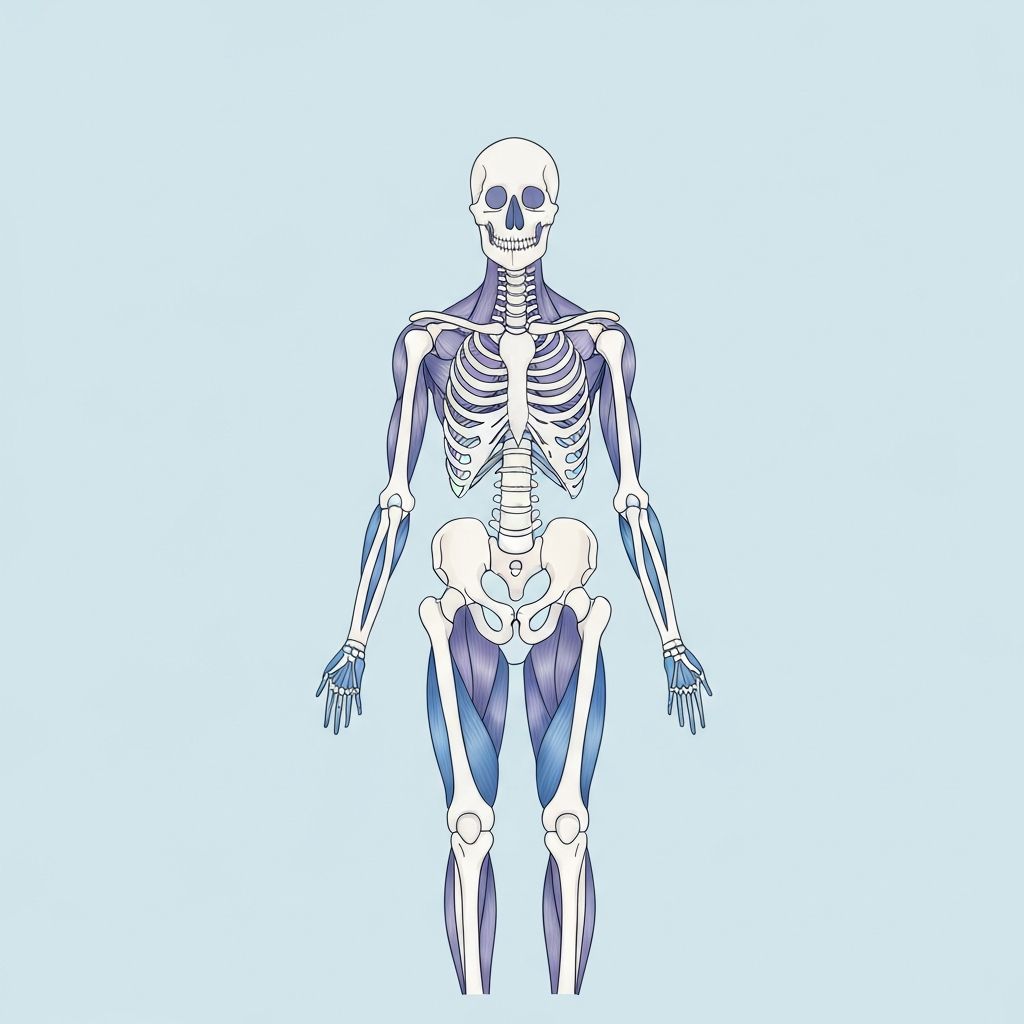
What is Posture?
Posture refers to the alignment and positioning of the body's segments relative to each other—how the head aligns over the shoulders, how the spine curves, the position of the pelvis, and the alignment of the legs and feet. Good posture maintains the natural curves of the spine while distributing weight efficiently through the skeletal system. This efficient alignment reduces unnecessary strain on muscles, joints, and connective tissues. Posture is not static; rather, it's a dynamic property that changes throughout the day and across different activities. Understanding principles of good posture allows for maintaining alignment during various daily activities.
The Spine and Postural Support
The spine consists of 33 vertebrae stacked upon each other, separated by discs of cartilage that provide cushioning and flexibility. The spine has natural curves: a cervical curve in the neck (lordosis), a thoracic curve in the mid-back (kyphosis), and a lumbar curve in the lower back (lordosis). These curves distribute forces efficiently throughout the spine. When posture deviates significantly from these natural curves—for instance, excessive forward head posture or excessive rounding of the upper back—the spine and supporting muscles must work harder to maintain balance, leading to unnecessary strain. Maintaining posture aligned with these natural spine curves reduces this strain.
Core Muscles and Stability
Deep core muscles—including the transverse abdominis, multifidus, and pelvic floor muscles—work to stabilize the spine and pelvis during all movements. When these muscles are engaged and functioning properly, they provide a stable foundation that allows other muscles to perform movement more efficiently. Conversely, if core muscles are weak or inactive, larger surface muscles must work harder to compensate, leading to fatigue and strain. Activities that strengthen and activate core muscles—such as pilates, yoga, or simple core engagement during daily activities—support better posture and more efficient body mechanics.
Sitting Posture and Workspace Ergonomics
For people who spend extended time sitting, posture during sitting becomes particularly important. Good sitting posture involves keeping the back against the chair with natural spine curves maintained, feet flat on the floor or footrest, hips at approximately 90 degrees, elbows at approximately 90 degrees when at a desk, and screen at eye level. When sitting posture deviates—such as slumping forward, twisting the spine, or reaching awkwardly—muscles must work harder and tissues become stressed. Simple adjustments to workspace ergonomics—such as monitor height, chair height, and keyboard position—can significantly improve sitting posture and reduce strain during extended sitting periods.
Standing Posture and Weight Distribution
Good standing posture involves standing tall with the head balanced over the shoulders, shoulders balanced over the hips, and hips balanced over the ankles. Weight should be distributed evenly through both feet rather than shifted to one side. The knees should be slightly soft (not locked), and the core should be gently engaged. Standing in this position distributes body weight efficiently through the skeletal system, reducing unnecessary muscle tension. Poor standing posture—such as protruding the head forward, shifting weight to one leg, or hyperextending the knees—creates muscular imbalance and strain. Throughout the day, periodic awareness and correction of standing posture maintains efficiency and reduces fatigue.
Lifting and Bending Mechanics
The way objects are lifted and the way the body bends during daily tasks significantly affect strain on the spine and joints. Proper lifting mechanics involve bending at the hips and knees rather than rounding the lower back, keeping objects close to the body, engaging core muscles, and lifting with the legs rather than the back. When picking up objects from the floor, squatting (bending at hips and knees) creates less strain than bending forward at the waist. When carrying objects, balanced weight distribution—such as carrying items in both arms or using a backpack with both straps—maintains better spinal alignment than carrying weight on one side. These principles of efficient body mechanics, when applied consistently, reduce unnecessary strain during daily tasks.
Walking and Gait Mechanics
Walking involves coordinated movement of multiple body segments. Efficient walking involves maintaining upright posture, taking steps of appropriate length, landing heel-first and rolling through to push off with the toes, maintaining balanced arm swing, and moving in a relatively straight line. When walking, allowing the pelvis and spine to rotate naturally during the gait cycle distributes forces through multiple joints and reduces concentrated strain. Poor walking mechanics—such as shuffling, asymmetrical step length, or excessive upper body movement—can create strain and fatigue. Paying attention to walking posture and mechanics during daily movement maintains efficiency and comfort.
Dynamic Posture Throughout the Day
Rather than striving for a single "perfect" static posture, understanding that the body moves throughout the day and benefits from variety in positioning is important. Varying postures—standing, sitting, changing positions frequently—distributes loads across different tissues. The worst posture is the one held statically for too long. People who frequently change positions, take breaks from sitting, stand periodically, and move regularly maintain better overall spinal health than those who maintain any single position for extended periods. Building movement breaks and postural variety into daily routines supports better long-term posture and comfort.
Conclusion
Understanding the fundamental principles of posture and body mechanics—efficient spine alignment, core stability, and coordinated movement—provides foundation for maintaining physical comfort and function in daily life. Simple awareness of how the body is positioned during sitting, standing, lifting, and moving, combined with occasional adjustments and postural variety, supports long-term physical comfort and efficient body function. These principles demonstrate that physical comfort in everyday activities depends on how movement and positioning are approached rather than on any single rigid standard.
Disclaimer: This article is educational content only and is not intended as medical advice or physical therapy guidance. Individual circumstances, existing conditions, and capabilities vary. For concerns about posture, body mechanics, or pain, consult with a qualified healthcare professional or physical therapist.